Logo AnimGAnimG

Chemistry animation videos

Explora ejemplos curados de animaciones de Chemistry con escenas reutilizables de Manim, explicaciones visuales e ideas listas para el aula.

8 animaciones

Balancing Chemical Equations

Balancing Chemical Equations

Teaches the law of conservation of mass by balancing two chemical equations step by step. Shows atom-count tracking on both sides of the equation, then demonstrates adding coefficients to balance H₂ + O₂ → H₂O and CH₄ + O₂ → CO₂ + H₂O.
Le Chatelier's Principle

Le Chatelier's Principle

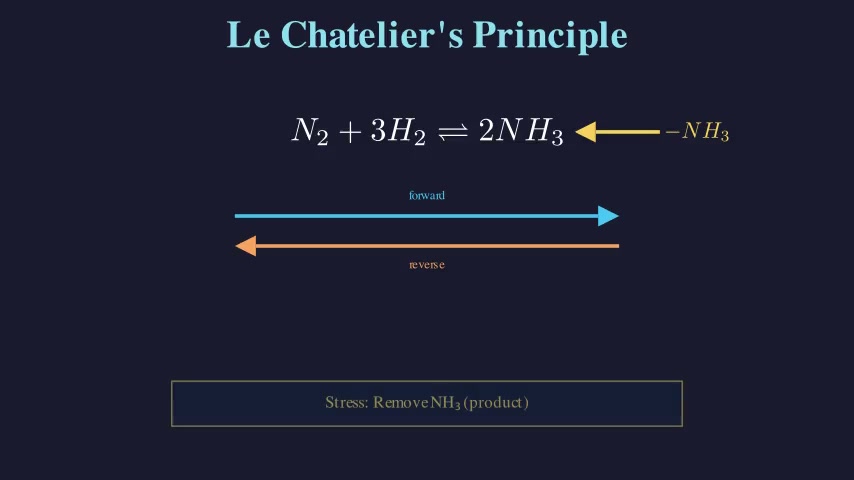
Demonstrates Le Chatelier's Principle using the Haber process (N₂ + 3H₂ ⇌ 2NH₃). Shows three stresses applied to a system at equilibrium and how the equilibrium position shifts in response to each stress using arrow-size animations.

The pH Scale

The pH Scale

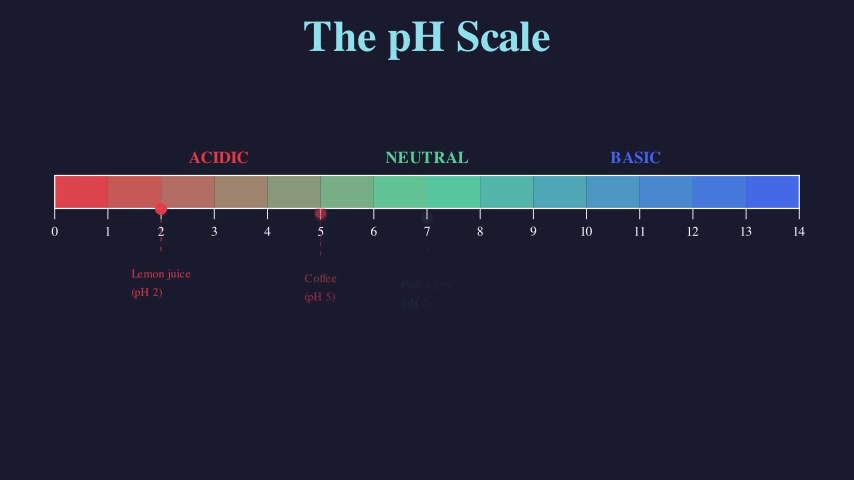
Introduces the pH scale from 0 to 14 with a color-gradient bar and real-world substance examples. Explains the logarithmic relationship between pH and hydrogen ion concentration, and animates how H⁺ concentration changes across the scale.

Covalent Bonding — Electron Sharing

Covalent Bonding — Electron Sharing

Demonstrates covalent bonding by showing two hydrogen atoms sharing electrons to form H₂, then extends to water (H₂O) where oxygen shares electrons with two hydrogens. Electron clouds overlap to illustrate shared pairs.

Ionic Bonding — Electron Transfer

Ionic Bonding — Electron Transfer

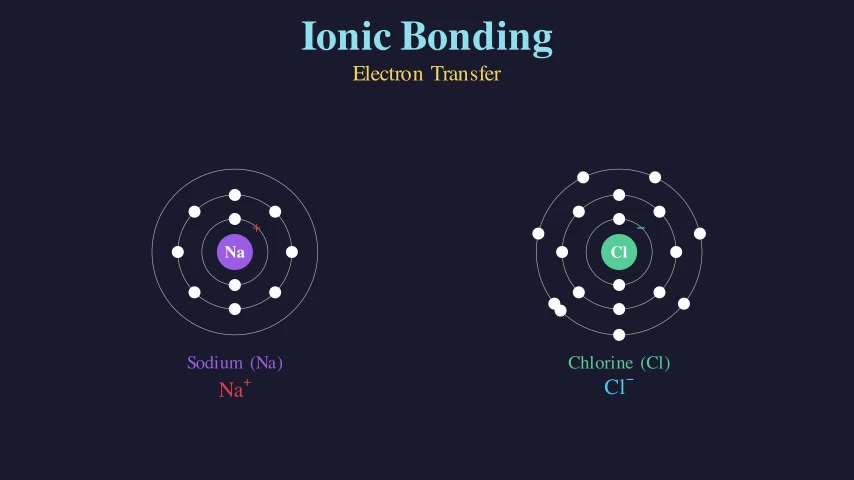
Visualizes ionic bonding by showing how sodium donates its single valence electron to chlorine. The resulting oppositely charged ions attract each other to form NaCl. Electron shell diagrams and LaTeX equations are shown at each step.

Periodic Table Structure

Periodic Table Structure

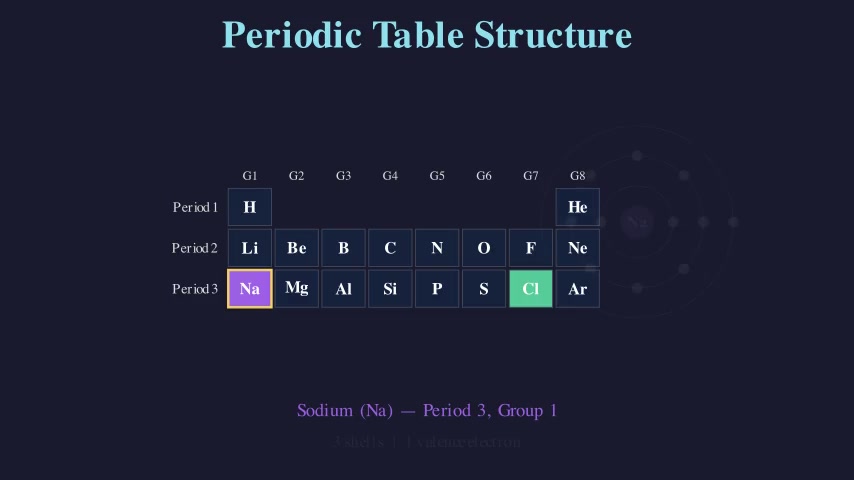
Introduces students to the structure of the periodic table by showing the first three periods. Demonstrates how rows (periods) correspond to electron shells and columns (groups) indicate valence electrons, using Na and Cl as worked examples with Bohr-model shell diagrams.

Atoms & Molecules

Atoms & Molecules

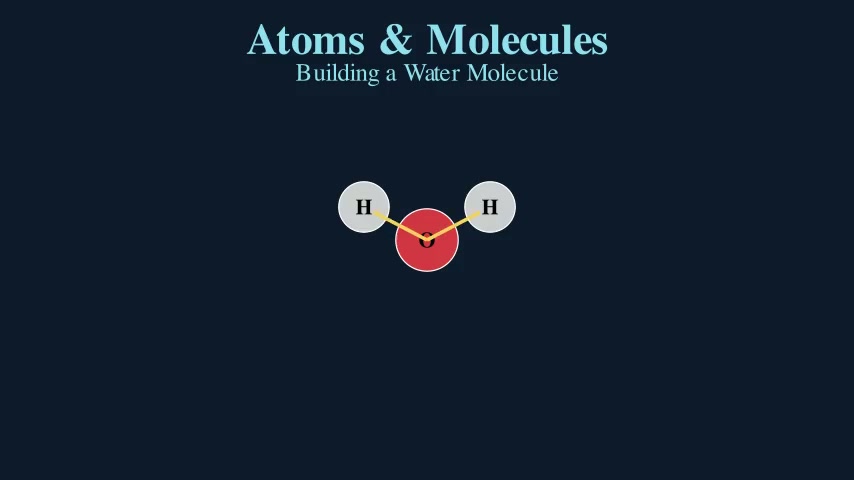
A visual introduction to atoms and molecules for primary school students (ages 6–11). Shows how atoms (tiny building blocks) combine to form molecules, using water (H₂O) as the main example. Key takeaway: everything is made of tiny particles called atoms, and when they join together they make molecules.

States of Matter as Particle Speed

States of Matter as Particle Speed

Shows how the three states of matter differ at the particle level. Solid particles vibrate tightly in place, liquid particles flow loosely, and gas particles fly freely. A thermometer rises as heat is added to drive each transition.