AnimG-LogoAnimG

Algebra animation videos

Browse curated Algebra animation examples in Math, including reusable Manim scenes, visual proofs, and teaching-ready ideas.

Math Β· 13 Animationen

Geometric Series

Geometric Series

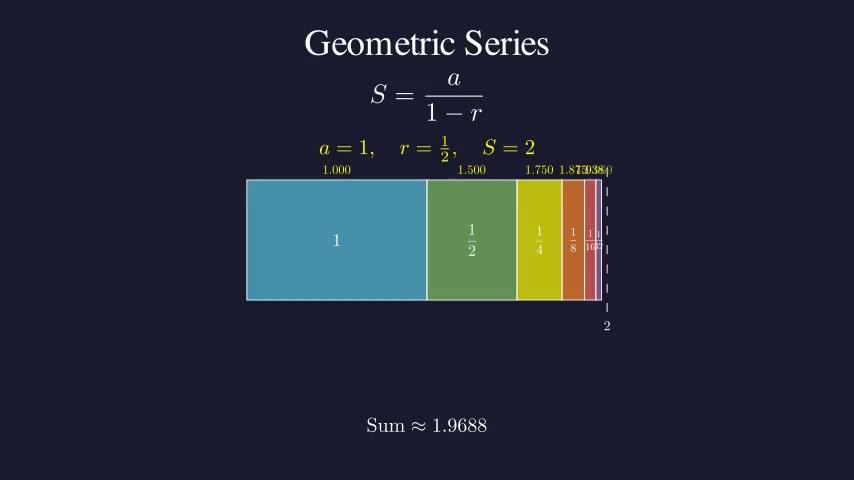
This animation visualizes the infinite geometric series 1 + 1/2 + 1/4 + 1/8 + ... by repeatedly halving a unit square. Each term is shown as a filled rectangle that fits beside the previous ones like puzzle pieces, and the partial sums are displayed numerically, all converging toward the limit of 2.
Linear Functions: Slope & Y-Intercept

Linear Functions: Slope & Y-Intercept

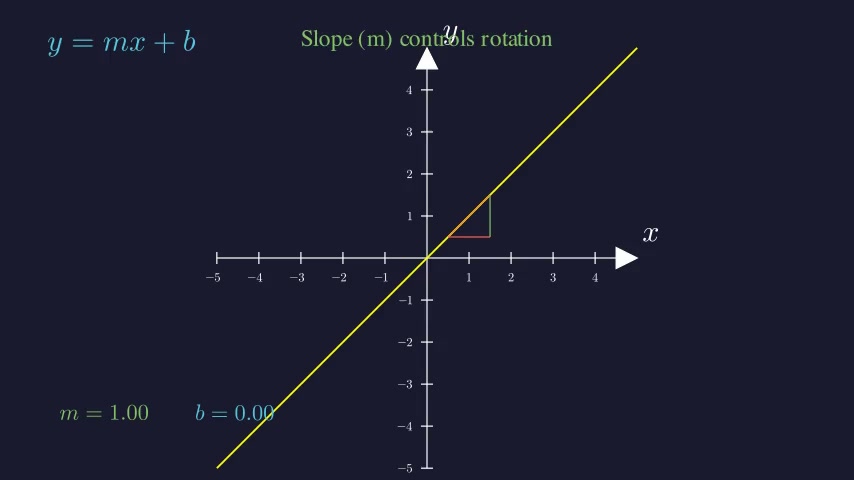
This animation introduces linear functions of the form y = mx + b by visually demonstrating how the slope (m) and y-intercept (b) affect the graph. A line rotates as the slope changes from -2 to 2, then shifts vertically as the intercept changes from -3 to 3. A rise/run right-triangle indicator reinforces the geometric meaning of slope.

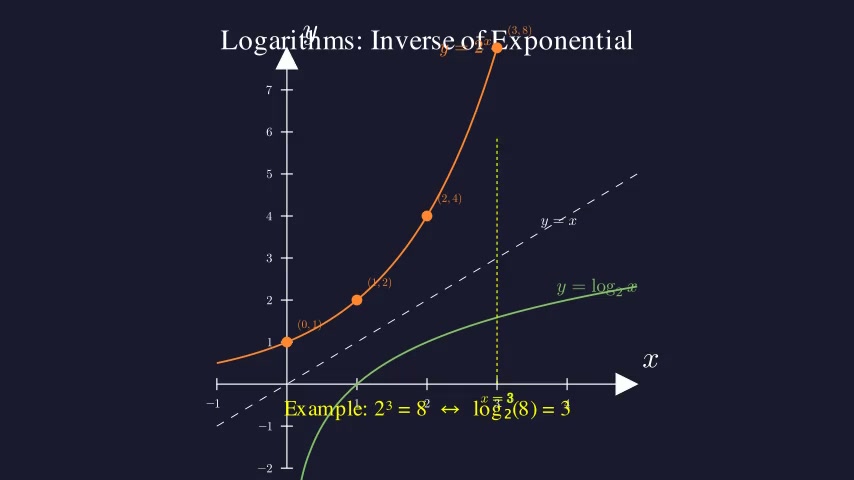
Logarithms: Inverse of Exponential

Logarithms: Inverse of Exponential

This animation establishes the relationship between exponential and logarithmic functions. It plots y = 2^x and y = logβ‚‚(x) side-by-side reflected across y = x, demonstrating inverse symmetry. A concrete numeric example (2Β³ = 8 β†’ logβ‚‚(8) = 3) is shown with perpendicular guide lines, making the inverse relationship tangible.

Deriving the Quadratic Formula

Deriving the Quadratic Formula

This animation walks through the algebraic derivation of the quadratic formula by completing the square step-by-step. Each line of algebra appears via a MathTex Write or TransformMatchingTex animation, building from ax² + bx + c = 0 all the way to x = (-b ± √(b²-4ac)) / 2a. The discriminant is highlighted in a distinct color to emphasize its role.

The Quadratic Parabola

The Quadratic Parabola

This animation explores the standard form of a quadratic y = axΒ² + bx + c by animating each coefficient. Students see how 'a' controls width and direction, 'c' shifts the parabola vertically, and the vertex traces a path as parameters change. The formula updates in real time alongside the graph.

The Cartesian Coordinate System

The Cartesian Coordinate System

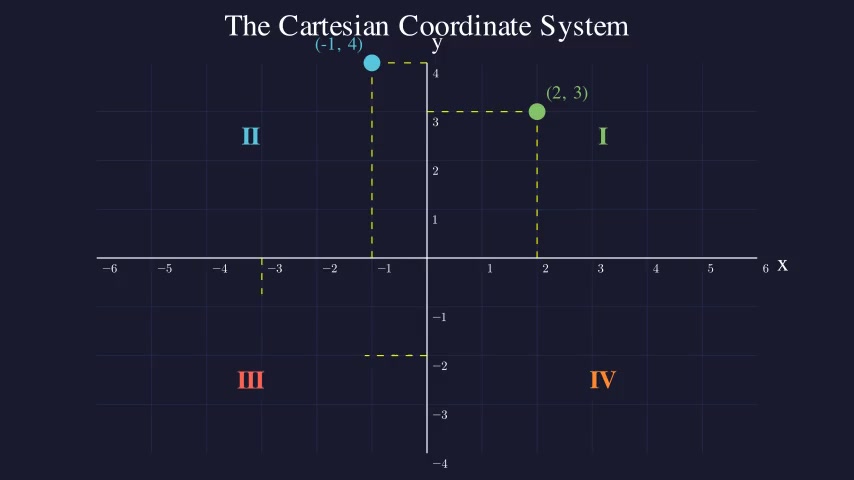
Introduces the Cartesian coordinate system by drawing labeled x and y axes with gridlines, then plotting four points across all four quadrants. For each point, dashed guide lines reveal how to read x and y coordinates.

Introduction to Variables

Introduction to Variables

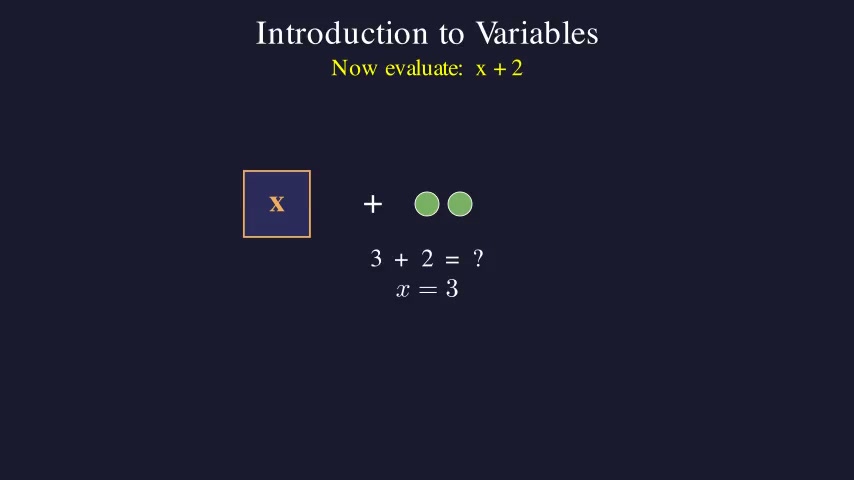
Uses the metaphor of a "mystery box" to explain that a variable is a placeholder that can hold different values. Students see the same expression x + 2 evaluated for x = 3 and x = 7, building intuition before formal algebra.

Negative Numbers on the Number Line

Negative Numbers on the Number Line

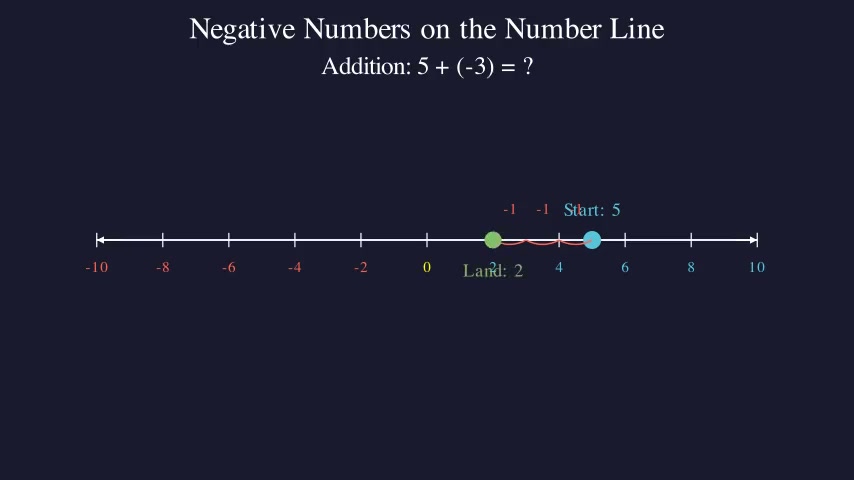
Introduces negative numbers by showing a number line from -10 to +10 and demonstrating that numbers extend to the left of zero. Students see that negative and positive numbers are mirror images, then practice addition and subtraction using animated hops.

Percentages

Percentages

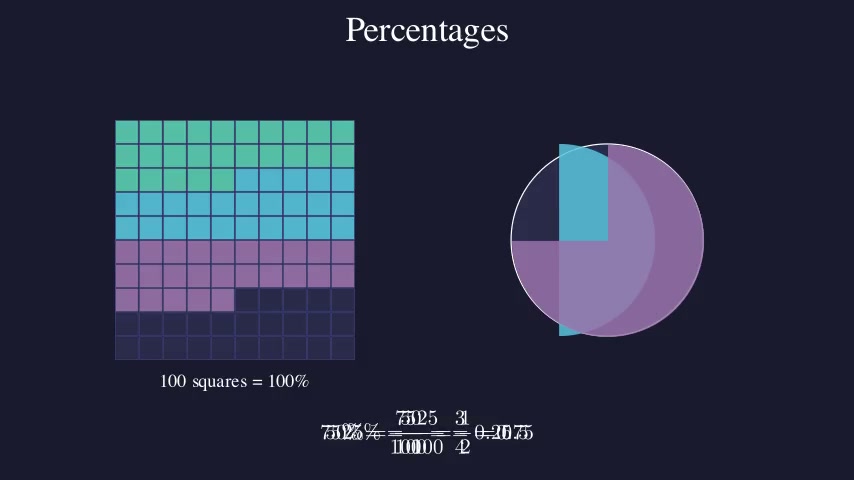
Builds understanding of percentages by shading a 10Γ—10 grid and connecting it to fractions and decimals. A real-world discount example (20% off $50) anchors the concept in everyday math.

Ratios & Proportions

Ratios & Proportions

Demonstrates ratios using colored bars and shows how proportional scaling maintains the ratio. A recipe context (flour to sugar) makes the concept concrete and relatable for middle schoolers.

Addition & Subtraction on a Number Line

Addition & Subtraction on a Number Line

Show a number line from 0 to 20 with a colorful arrow hopping right for addition and left for subtraction. Two worked examples are shown: 5+3=8 (three hops right) and 8-3=5 (three hops left). Each hop is animated individually with equation labels updating live.

Multiplication as Repeated Groups

Multiplication as Repeated Groups

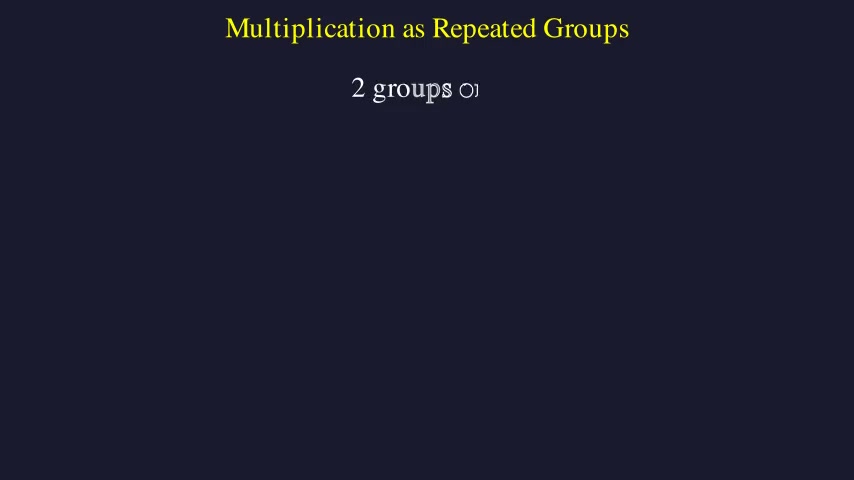
Demonstrates multiplication as repeated equal groups using colored dot arrays. Two examples are shown: 3Γ—4 (three groups of four) and 2Γ—5 (two groups of five). Groups appear one at a time, then dots rearrange into a neat grid with the equation label.

Complex Numbers as Rotations

Complex Numbers as Rotations

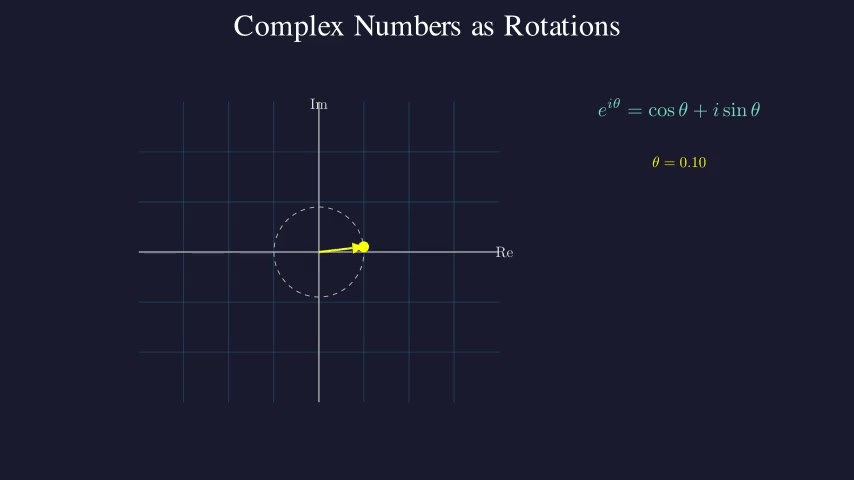
Shows the complex plane as a geometric framework where multiplication by i corresponds to a 90-degree rotation. Builds up to Euler's formula e^(iΞΈ) as a general rotation, culminating in the famous identity e^(iΟ€) = -1.